
Neurofeedback
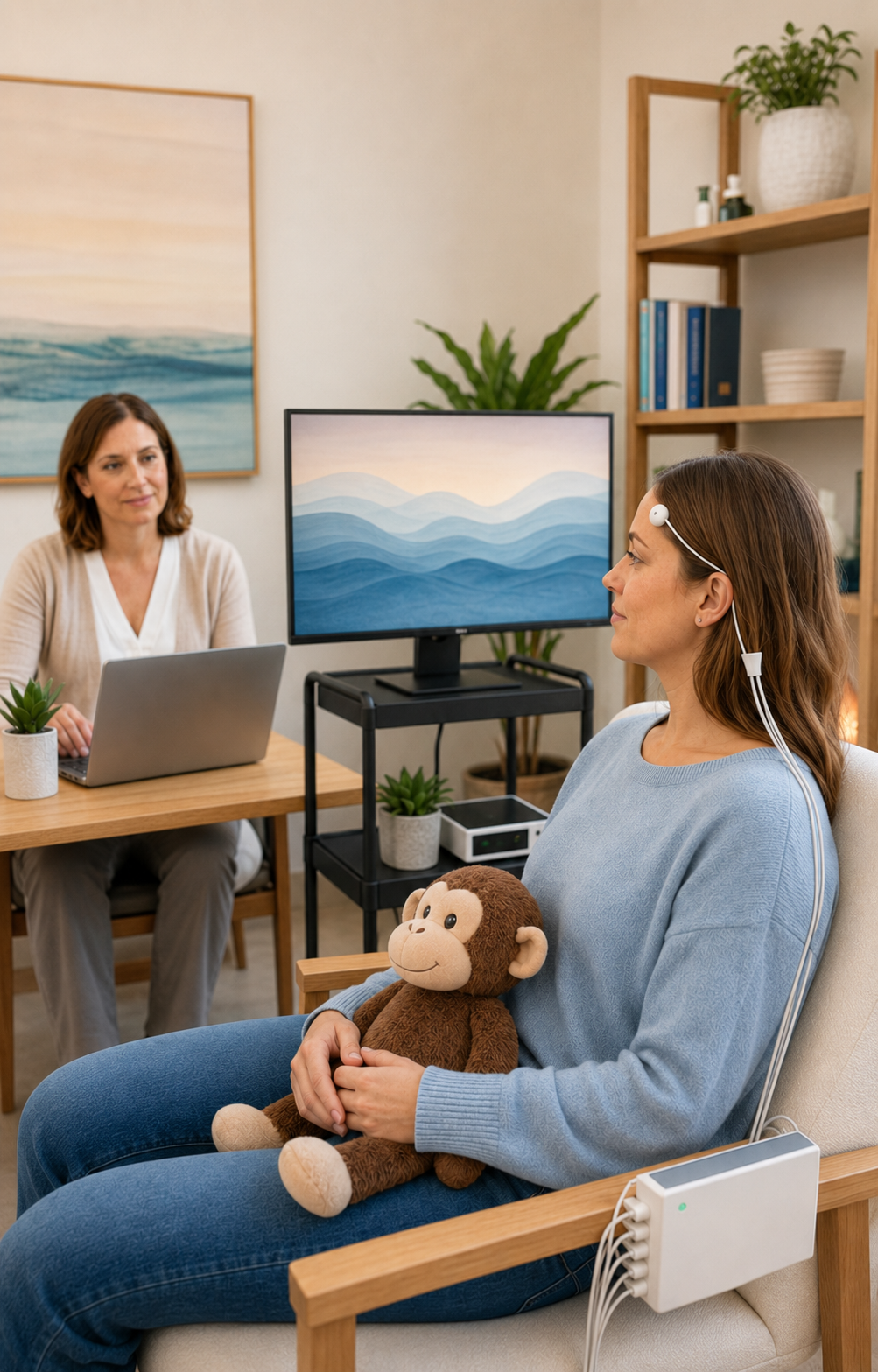
Neurofeedback is a gentle, noninvasive form of brain training that uses sensors placed on the scalp to monitor brainwave activity. During a session, that activity is translated into real-time visual or auditory feedback—often through a video, game, or sound—giving the brain opportunities to practice more flexible and regulated patterns.
People may explore neurofeedback for support with attention, stress, sleep, emotional regulation, or other personal goals. At Alexander Counseling Center, neurofeedback is tailored to the individual. Availability, age eligibility, recommended session plan, and how neurofeedback is incorporated into care vary by therapist.
What Is Neurofeedback?
Neurofeedback, also called EEG biofeedback, is a form of training that helps the brain practice more balanced and efficient patterns of activity. Small sensors placed on the scalp measure brainwave activity and send that information to a computer. The sensors simply monitor activity—they do not send electricity into the brain.
The computer translates this activity into feedback that can be seen or heard in real time. With repetition, the brain receives opportunities to practice greater flexibility and self-regulation, much like learning any other skill. The training is personalized around each person’s needs, goals, and responses.
How Neurofeedback Works
During a neurofeedback session, sensors record brainwave activity while you relax and watch a video, play a simple game, or listen to audio. Specialized software monitors selected patterns in real time. As brain activity changes, the picture or sound responds, providing immediate feedback.
You do not have to consciously control or “figure out” the process. Learning happens gradually through repeated feedback. Sensor placement, training goals, and the type of feedback used are individualized and may be adjusted over time based on your needs and responses.
What to Expect During a Session
At the beginning of a session, your therapist will check in with you and review any changes, concerns, or goals. Small sensors are then gently placed on the scalp to monitor brainwave activity. You remain awake and comfortably seated, often watching a video or interacting with a simple visual program while the training takes place.
Afterward, the sensors are removed and your therapist may ask about your experience. Because neurofeedback is a learning process, training generally occurs over a series of sessions. The recommended frequency, number of sessions, and overall plan will depend on your individual goals, responses, and therapist’s recommendations.
Goals Neurofeedback May Support
People explore neurofeedback for many different reasons. Goals may include improving attention and concentration, supporting more restful sleep, managing stress, strengthening emotional regulation, or feeling more settled and resilient in everyday life. Some people also use neurofeedback to support learning, performance, or recovery from overwhelming experiences.
Neurofeedback is not a one-size-fits-all service, and individual experiences can vary. Your therapist will help you explore your goals, discuss whether neurofeedback may be appropriate, and determine how it might fit within your broader care.
Is Neurofeedback Right for You?
Neurofeedback may be worth exploring if you are interested in a noninvasive, skills-based approach and are comfortable committing to a gradual training process. You do not need to know whether it is the right fit before reaching out—questions and uncertainty are welcome.
Your therapist can talk with you about your concerns, goals, health history, and what you hope will improve. Together, you can decide whether neurofeedback makes sense as part of your care or whether another approach may better support your needs.
Neurofeedback at Alexander Counseling Center
Alexander Counseling Center offers neurofeedback in our Medford office using specialized equipment in a calm, comfortable setting. Training is personalized around your goals and may be used on its own or incorporated into a broader, individualized treatment plan.
Neurofeedback is provided by select therapists. Availability, age eligibility, recommended frequency, and how the service is incorporated into care vary by therapist. Our office can answer your questions and help connect you with a provider whose services and availability may be a good fit.